Mind Mapping Techniques: Enhancing Critical Thinking through Visual Puzzles
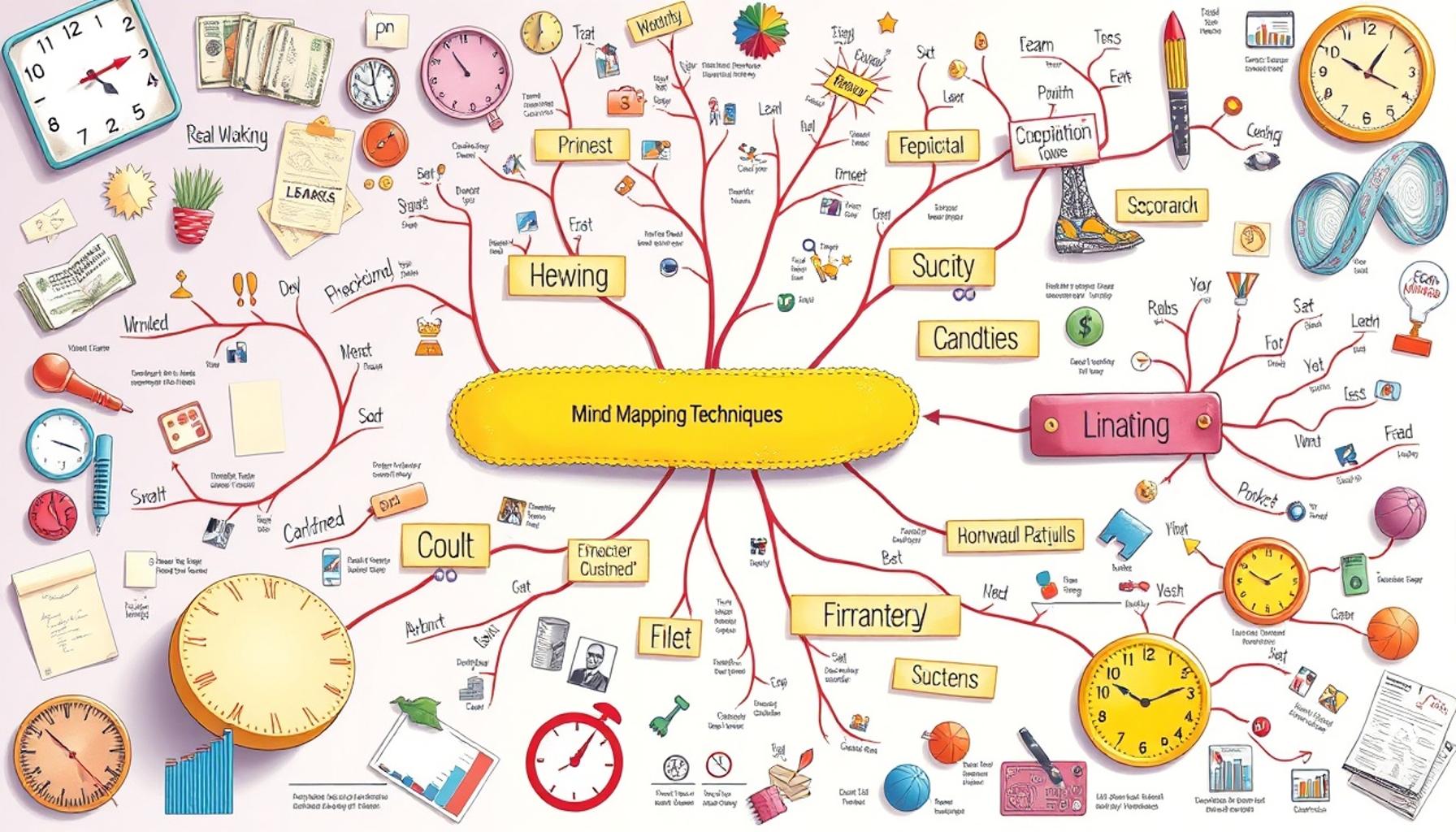
Unlocking Critical Thinking with Mind Mapping
Today’s information-rich environment demands that individuals develop strong critical thinking abilities. Mind mapping techniques, which effectively organize thoughts through visual representation, have emerged as essential tools for navigating this complexity. By simplifying complicated ideas into interconnected visual structures, these techniques enable deeper understanding and facilitate better decision-making.
- Visual Learning: Mind maps are vibrant and colorful, often incorporating imagery and symbols to help trigger creativity and enhance memory retention. For instance, a student studying World War II could use different colors to represent various countries, while icons could denote key battles, leaders, or events. This approach not only makes the study material more engaging but also aids in quicker recall.
- Enhanced Organization: By categorizing thoughts into branches and sub-branches, mind maps help clarify the relationships and hierarchies among different ideas. For example, a project manager might map out a project timeline, breaking down tasks into phases and assigning responsibilities visually, making it easier for all team members to understand their roles.
- Problem Solving: Integrating visual puzzles within mind mapping can inspire innovative solutions to challenges. By visually dissecting problems, individuals can identify underlying factors and brainstorm creative alternatives. For instance, during a business strategy meeting, team members can use mind maps to visualize market trends, customer feedback, and product features simultaneously, fostering a collaborative problem-solving atmosphere.
Research backs the effectiveness of mind mapping in enhancing cognitive abilities. According to a study published in the journal “Educational Psychology,” students who incorporate mind mapping into their study habits show significant improvements in information retention and recall, both of which are crucial components of successful learning outcomes. In professional settings, individuals across sectors—including education, health care, and technology—use mind mapping for everything from brainstorming to strategic planning and enhancing productivity.
Given the widespread adaptability of mind mapping techniques, it is crucial for individuals wishing to sharpen their critical thinking skills to understand and apply these strategies. The subsequent sections will investigate various mind mapping methods, highlighting how they can cultivate fresh insights and connections through engaging visual tools. By leveraging these techniques, one can master the art of critical thinking in a increasingly complex world.
The Power of Mind Mapping Techniques in Critical Thinking
Mind mapping is not just a simple technique; it is a powerful cognitive tool that can transform the way individuals approach complex concepts and problems. In a landscape overwhelmed by dense information, mind mapping techniques offer a refreshing strategy to enhance critical thinking skills. With the capability to visualize relationships and hierarchies, these techniques push the boundaries of traditional note-taking and idea organization.
One of the primary ways that mind maps facilitate critical thinking is through their ability to promote active engagement with information. When learners actively create mind maps, they are not merely passive recipients of knowledge but become active participants in the learning process. This practice sharpens their analytical abilities, encouraging them to question assumptions, explore connections, and examine different perspectives. As they design their maps, learners are prompted to synthesize information and evaluate its relevance, fostering a more profound understanding of the material at hand.
Connecting Ideas through Visual Representation
At the core of mind mapping is the principle of non-linear thinking. Traditional note-taking often structures information in a linear manner, which can lead to oversights and cognitive overload. In contrast, mind maps allow for a more organic exploration of ideas, enabling relationships between concepts to surface. This transformation from linear to non-linear thinking plays a crucial role in critical thinking, as individuals begin to see the bigger picture and detect patterns that might otherwise go unnoticed.
- Improved Comprehension: Mind maps can help learners gain a deeper understanding of a subject by allowing them to visually dissect complex ideas. For example, a high school science student studying ecological systems can create a mind map that delineates the interconnections between various ecosystems, species, and environmental factors, leading to greater insight into the subject matter.
- Facilitated Discussions: In group settings, mind mapping can serve as a collaborative platform that drives collective brainstorming sessions. Team members can contribute to a single map, enriching the conversation with diverse perspectives, refining ideas, and ultimately arriving at more innovative solutions. In a corporate environment, for instance, a product development team may utilize mind mapping during planning meetings to align their goals and strategies effectively.
- Cognitive Flexibility: The act of constructing a mind map encourages individuals to shift between different ideas and concepts quickly. This cognitive flexibility is crucial for effective problem solving and decision making in dynamic situations, such as in fast-paced industries. Employees trained in mind mapping techniques are often better equipped to adapt to change and think on their feet.
Incorporating mind mapping into one’s routine is a strategic choice that can profoundly influence an individual’s ability to think critically. Its visual nature not only enhances memory retention but also simplifies complex thought processes, making it easier to manipulate and evaluate information. As we delve deeper into specific mind mapping techniques and their applications, it becomes clear that mastering these skills can significantly elevate one’s cognitive capacity in both academic and professional spheres.
Mind Mapping Techniques: Enhancing Critical Thinking through Visual Puzzles
In exploring mind mapping techniques, we uncover a toolkit designed to ignite creativity and enhance critical thinking. This visual approach allows individuals to organize thoughts and ideas in a structured yet flexible format, unlocking a multitude of problem-solving capabilities. Mind mapping engages both the left and right brains, leading to holistic understanding and innovative solutions.
| Advantages | Description |
|---|---|
| Enhanced Memory Retention | Mind maps utilize visual elements, making it easier to recall information through associated images and colors. |
| Increased Creativity | By stimulating diverse thought processes, mind mapping fosters an environment for creative problem-solving and innovation. |
These techniques are not only beneficial for students in academic settings but also for professionals requiring enhanced productivity and strategic planning. By visualizing connections between ideas, users can easily identify gaps in knowledge and explore new perspectives. This is particularly effective in fields such as education, project management, and even personal development. As you delve deeper into this engaging method, you may find that mind mapping transforms the way you approach challenges and develop solutions.
For those interested in further exploring the practical applications and techniques of mind mapping, numerous resources and tools are available to guide you through your journey towards improved cognitive skills and enhanced problem-solving abilities.
Exploring Specific Mind Mapping Techniques
To truly harness the potential of mind mapping techniques for enhancing critical thinking, it is essential to explore various approaches that cater to different learning and cognitive styles. Each method offers unique advantages, making it easier for individuals to find a technique that resonates with their personal preferences and enhances their analytical skills.
Concept Mapping
One effective method of mind mapping is concept mapping, which involves connecting ideas through labeled arrows to illustrate relationships. This technique transcends simple associative links and allows for a more detailed exploration of how concepts interact. For instance, in a business course, a student can create a concept map that clarifies the links between marketing strategies, consumer behavior, and sales outcomes. By doing so, they can analyze how these elements influence each other and ultimately drive success within a company.
Flowcharts
Flowcharts are another impactful way to visualize processes and decision-making paths. They break down complex systems into smaller, manageable segments, making it easier for individuals to evaluate each step critically. For example, in programming, flowcharts allow developers to map out algorithms visually, helping them identify potential errors or inefficiencies before implementation. This method not only strengthens critical thinking but also enhances problem-solving skills by reinforcing logical sequencing.
Digital Mind Mapping Tools
With the advent of technology, digital mind mapping tools such as MindMeister and XMind have gained popularity. These platforms enhance collaboration and make it easy to share mind maps in real-time, an essential feature for group projects or brainstorming sessions. Students and professionals alike can benefit from features like cloud integration, which allows for accessibility across devices and facilitates the participation of team members from diverse locations. Individuals using these tools are often more equipped to think critically as they easily iterate on ideas by incorporating feedback and exploring new avenues.
Visual Puzzles and Metaphors
In addition to structured techniques, incorporating visual puzzles and metaphors into mind mapping can further invigorate the critical thinking process. Puzzles such as Sudoku or logic grids can serve as inspiration for creating intricate mind maps that explore thematic relationships. By leveraging metaphors—like comparing a business ecosystem to a natural ecosystem—learners can engage their creativity, encouraging divergent thinking. Such mental exercises not only assist in idea generation but enhance the depth of analysis, as individuals explore the implications of their comparisons.
Incorporating Colors and Images
The use of colors and images in mind mapping can significantly impact how information is processed. Different colors can symbolize varying categories or emphasize critical points, enhancing memory retention. Research shows that visual stimuli provoke stronger reactions within the brain, leading to improved recall. For example, a health student might use red to signify danger or vital statistics and green for safe practices, facilitating a clearer understanding of the material. Incorporating relevant images, icons, or symbols can also provide contextual cues, helping to simplify complex information and establish lasting connections.
In summary, the array of mind mapping techniques available demonstrates not only the versatility of this cognitive tool but also its capacity to engage critical thinking across various disciplines. By exploring and implementing these diverse methods, individuals can elevate their understanding and problem-solving abilities, making mind mapping an indispensable resource in today’s fast-paced learning environments.
Conclusion: Unlocking Potential with Mind Mapping Techniques
In an era where information overload can stifle our analytical faculties, mind mapping techniques present a compelling solution for enhancing critical thinking skills through visual puzzles. This versatile approach not only fosters creative thought but also aids in organizing complex information in a comprehensible manner. By implementing various techniques—be it concept mapping, flowcharts, or digital tools—individuals can tailor their learning experiences to suit their unique cognitive styles.
Furthermore, the integration of visual puzzles and metaphors into mind mapping allows learners to engage with material in innovative ways. This not only enriches the understanding of intricate relationships between concepts but also fosters greater retention of information. With research indicating that visual stimuli provoke stronger brain responses, the incorporation of colors and images emerges as a powerful strategy to stimulate memory and enhance comprehension.
As we embrace these multifaceted mind mapping techniques, it becomes evident that every learner can benefit irrespective of their field. Whether one is a student deciphering complex theories or a professional strategizing for business success, these tools facilitate a structured yet flexible pathway for problem-solving. In conclusion, as we increasingly navigate a fast-paced world filled with multifarious challenges, mind mapping stands out as an essential cognitive resource. Explore it, experiment with it, and unlock the profound potential that lies within your thoughts.

Beatriz
Beatriz Johnson is a seasoned puzzle enthusiast and writer with a passion for unraveling the complexities of mind games and brain teasers. With over a decade of experience in the world of puzzles, she specializes in topics like logic games, riddles, and strategic challenges. Through her work, Beatriz empowers readers to sharpen their problem-solving skills, think creatively, and stay engaged in the ever-evolving landscape of mind games and puzzles.