Enhancing Memory through Crossword Puzzles
The Cognitive Benefits of Crossword Puzzles
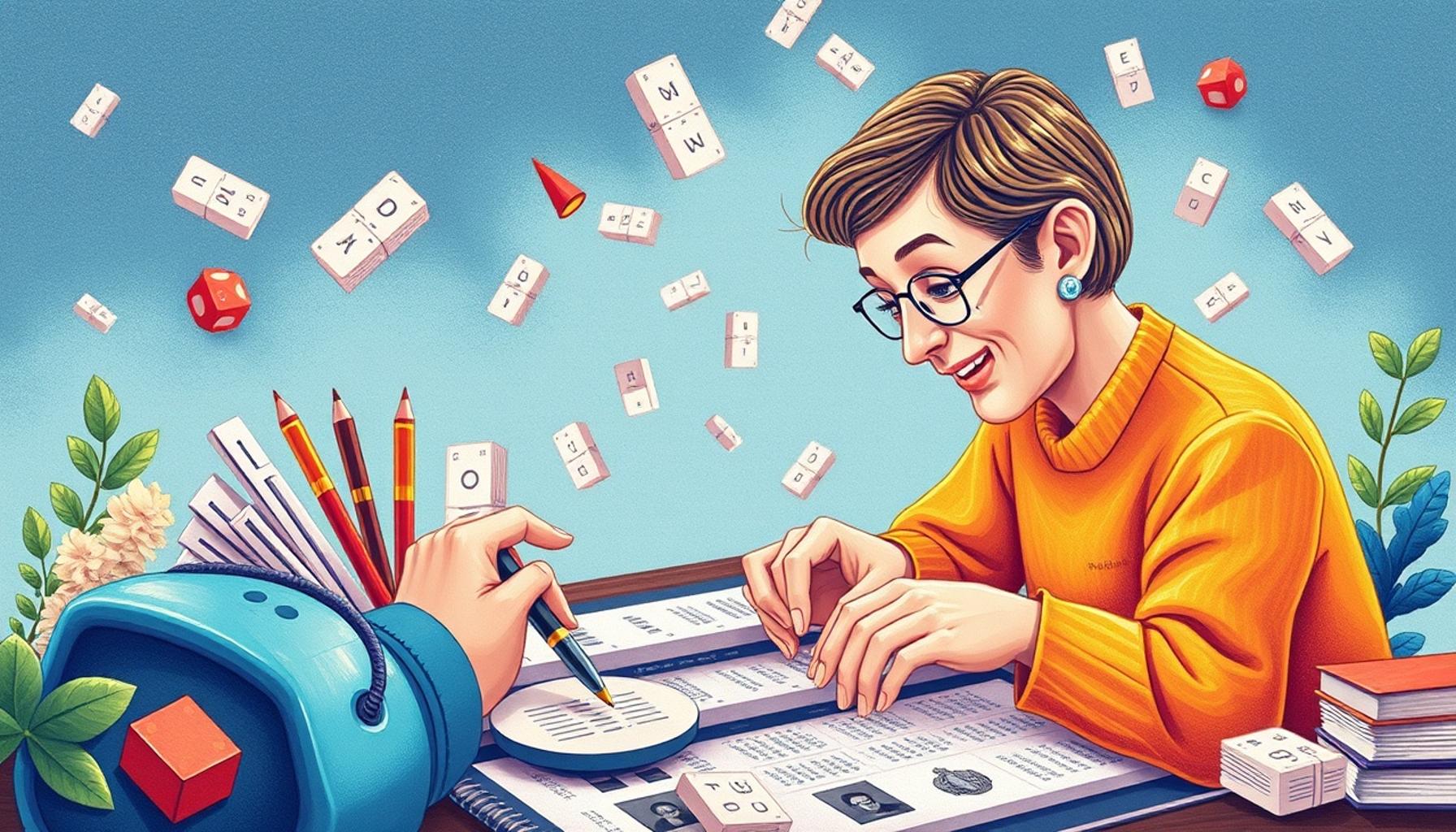
Engaging in crossword puzzles is more than just a pastime; it’s a strategic way to sharpen your mind. Studies suggest that activities like solving crosswords can significantly contribute to enhancing memory and cognitive function. As we delve into how crossword puzzles work their magic on our mental faculties, it becomes clear that this seemingly simple activity offers rich rewards for our brains.
Enhancing Vocabulary and Language Skills
One of the most evident benefits of crossword puzzles is that they boost vocabulary. As you frequently encounter unfamiliar words, your linguistic skills get a considerable enhancement. For instance, a puzzle might introduce you to obscure terms like “abecedarian,” which refers to something arranged alphabetically. This exposure not only enriches your lexicon but also encourages you to explore their meanings and usage. Over time, this expanded vocabulary can enhance not just your verbal communication skills but also your creativity in writing, speaking, and even social interactions.
Sharpening Problem-Solving Skills
Crossword puzzles also play a significant role in improving your problem-solving skills. Each puzzle presents a unique challenge requiring strategic thinking and creativity. As you work through the clues, you learn to connect dots and think outside the box. This practice can be paralleled with real-life situations where adaptable thinking is essential. For example, consider how a crossword clue might require you to abstractly associate a word to its definition, mirroring how you might need to draw parallels in workplace conflicts or personal relationships to find solutions.
Fostering Focus and Attention
On another level, tackling crossword puzzles is an excellent exercise for developing focus and attention. As you concentrate on deciphering clues, you inadvertently train your brain to maintain sustained attention to a task. This kind of focus can enhance your productivity in various aspects of life, from managing work deadlines to being more present in daily conversations with loved ones. One might find that, beyond the confines of the puzzle, such sharp focus spills over into everyday activities, improving overall efficiency and cognitive endurance.
Moreover, the repetitiveness of certain themes and clues can forge strong neural connections. As you become familiar with specific patterns or commonly used words, these connections may facilitate easier recall in different contexts, leading to long-term memory benefits. In a fast-paced world, the ability to retain and recall information is invaluable, whether it be remembering names, faces, or critical dates.
With a plethora of resources available, including apps and books dedicated to crossword puzzles, it’s easier than ever to incorporate this brain-boosting activity into your daily routine. Whether it’s during your morning coffee or before bed, solving crosswords can seamlessly fit into any lifestyle. Not only do they offer a moment of relaxation, but they also provide substantial cognitive benefits.
In conclusion, the fascinating world of crossword puzzles not only enhances memory but also serves as a fun and fulfilling challenge. By embracing this engaging activity, enthusiasts stand to gain valuable skills that can improve various facets of life, making it a worthwhile endeavor for anyone seeking to boost their mental agility.
Crossword Puzzles as a Memory Enhancement Tool
Crossword puzzles are not merely entertainment; they are an effective tool for enhancing memory and cognitive strength. By stimulating various areas of the brain, they facilitate not just word recall but also a host of interconnected cognitive processes. As researchers continue to explore the implications of cognitive activities on the aging brain, the transformative benefits of regularly engaging with crossword puzzles are becoming increasingly evident.
Memory Retention and Neural Plasticity
Engaging with crossword puzzles promotes memory retention through the concept of neural plasticity, which refers to the brain’s ability to reorganize itself by forming new neural connections. When you tackle a crossword, you inherently challenge your brain to retrieve information and make new associations, fostering this adaptability. For example, as you learn to fill in the blanks for “elusive sea creature,” you may stumble upon the word “octopus.” The next time you encounter that clue or a similar one, your brain’s retrieval process becomes more efficient. This reinforces the connections between neurons, solidifying the memory of the word and enhancing your overall vocabulary.
Building Associations and Contextual Learning
Crossword puzzles also enhance contextual learning. Each clue serves as a prompt that nudges your brain into retrieving related information. The interconnected nature of words and clues allows you to build an intricate web of associations. For instance, if solving a puzzle leads you to the word “carnivore,” your mind may wander to other terms like “predator” or “flesh-eater.” This type of associative learning is vital for memory formation, as it strengthens the links between various pieces of information, making it easier to recall them in the future.
- Crossword puzzles improve retention through repetitive exposure to words.
- They foster associative networks, speeding up information retrieval.
- Contextual clues provide a deeper understanding of terms and concepts.
Regular Engagement and Long-Term Memory
Research supports that regular engagement with cognitive activities, including crossword puzzles, correlates with a reduced risk of cognitive decline. A study published in the journal “Neurology” indicated that individuals who frequently engaged in puzzles demonstrated better cognitive function and slower mental decline than those who did not partake in such activities. Moreover, unlike passive forms of entertainment, crossword puzzles demand active participation, which is crucial for long-term memory enhancement. As your routine incorporates crossword puzzles, you uphold not only your memory but also encourage long-term brain health.
This dual approach to mental exercise, involving both challenging problem-solving and the consistent practice of recalling information, makes crossword puzzles a powerhouse activity for memory enhancement. As you challenge your mind with each new puzzle, you’re investing in your cognitive future—a challenge that is as rewarding as it is enjoyable.
| Category | Description |
|---|---|
| Cognitive Engagement | Crossword puzzles stimulate the brain, enhancing critical thinking and problem-solving skills. |
| Memory Enhancement | Participating in crossword puzzles can improve both short-term and long-term memory, helping to retain information better. |
| Vocabulary Expansion | Crosswords introduce new words, thereby enriching players’ vocabulary and enhancing language skills. |
| Mental Health | Solving puzzles is linked to reduced stress levels, providing a fun way to relax while exercising the brain. |
Engaging regularly with crossword puzzles not only cultivates a robust cognitive ability but also serves as an enjoyable pastime that encourages learning and relaxation. These puzzles are more than just a game; they are a gateway to sharper memory and mental agility. As you immerse yourself in the world of words and clues, you can experience the tangible benefits of bolstering your cognitive function while expanding your vocabulary. The mental stimulation from solving puzzles acts like a workout for your brain, promoting neuroplasticity—an essential element for maintaining cognitive health as we age. Discover how integrating crossword puzzles into your daily routine can lead to significant improvements in your memory retention and overall mental sharpness.
The Social Component of Crossword Puzzles
Crossword puzzles are typically thought of as solitary endeavors, but they also serve as a powerful social activity capable of enriching memory through collaboration. Engaging with friends or family members in solving puzzles introduces a dynamic where shared knowledge and discussions can enhance the learning experience. When a group tackles a particularly tricky clue together, each member brings unique insights, enhancing collective memory retention and understanding.
Collaboration Fuels Cognitive Engagement
The collaborative aspect of solving crossword puzzles not only fosters camaraderie but also pools various cognitive resources. When members discuss clues and definitions, they engage in active recall and continuous processing of information. Research has shown that interactive learning environments significantly improve memory retention compared to solitary study methods. For instance, if one participant knows that “Romeo’s love” is “Juliet,” they are not only demonstrating their memory but also reinforcing that information within the group. The act of teaching and explaining concepts to others serves to solidify one’s own memory and understanding.
- Discussions during puzzle-solving provide diverse perspectives, enhancing memory retention.
- Collaborative problem-solving leads to shared excitement, reinforcing engagement.
- Social interactions during puzzles create memorable experiences that help anchor knowledge.
Puzzles in Educational Settings
Crossword puzzles have also found their way into educational environments, where educators use them to improve vocabulary and comprehension among students. This method not only enhances memory but also creates a fun, interactive learning atmosphere. For example, language classes that incorporate crossword puzzles into their curricula report better student engagement and retention of new vocabulary. Such puzzles become effective tools for learners, enabling them to make connections between terms within context, further reinforcing the cognitive pathways.
Studies from educational psychology suggest that students who participate in crossword-based learning tend to perform better in assessments related to vocabulary recognition and recall. When students work on puzzles collaboratively, they are likely to discuss different aspects of word meanings, pronunciation, and usage, which deepens their understanding and strengthens memory through contextual learning.
Digital Age and Accessibility
The rise of digital platforms has made crossword puzzles more accessible than ever, allowing users to engage with them on-the-go. Apps that feature daily puzzles and interactive elements have capitalized on the growing trend of mobile learning. These digital platforms often include hints, timers, and sharing options, which encourage interaction and competition. Research indicates that gamified and digital learning experiences can boost engagement and retention, making crossword puzzles a vibrant and stimulating choice for memory enhancement.
Furthermore, features such as collaborative online puzzles allow friends and family, regardless of geographical barriers, to connect through the shared challenge of crossword-solving. This innovative approach enables individuals to benefit from the memory-enhancing advantages of social interaction, even if they are miles apart.
Incorporating crossword puzzles into daily routines—solo or with others—can yield significant cognitive gains, presenting a fun and strategic avenue to enhance memory while fostering lifelong learning.
Conclusion: The Multifaceted Benefits of Crossword Puzzles
In summary, crossword puzzles represent a unique intersection between entertainment and cognitive enhancement, offering a myriad of benefits that extend far beyond mere amusement. Engaging in crossword puzzles, whether individually or in collaborative settings, can be a powerful tool for enhancing memory. The dynamic of group solving encourages an exchange of ideas and knowledge, fostering a stimulating environment where collective memory thrives. As we have explored, this social component not only bolsters engagement but also strengthens cognitive connections through rich discussion and active recall.
Furthermore, the integration of crossword puzzles in educational contexts has been proven to improve vocabulary acquisition and retention, making them valuable assets in teaching methodologies. In an era where digital accessibility is paramount, the rise of innovative online platforms has made these intellectual challenges more widely available, catering to diverse demographics and encouraging interactivity. This flexibility allows more individuals to reap the memory-enhancing benefits of crossword puzzles, regardless of geographic or social barriers.
Ultimately, incorporating crossword puzzles into daily routines not only serves as a fun pastime but also stimulates brain functions that promote memory retention, learning, and social interaction. As more people recognize these multifaceted advantages, the humble crossword puzzle stands to solidify its role as a practical yet enjoyable vehicle for lifelong cognitive growth and memory enhancement. By embracing this activity, individuals can unlock their mental potential and pave the way for a more engaged and educated mind.

Beatriz
Beatriz Johnson is a seasoned puzzle enthusiast and writer with a passion for unraveling the complexities of mind games and brain teasers. With over a decade of experience in the world of puzzles, she specializes in topics like logic games, riddles, and strategic challenges. Through her work, Beatriz empowers readers to sharpen their problem-solving skills, think creatively, and stay engaged in the ever-evolving landscape of mind games and puzzles.