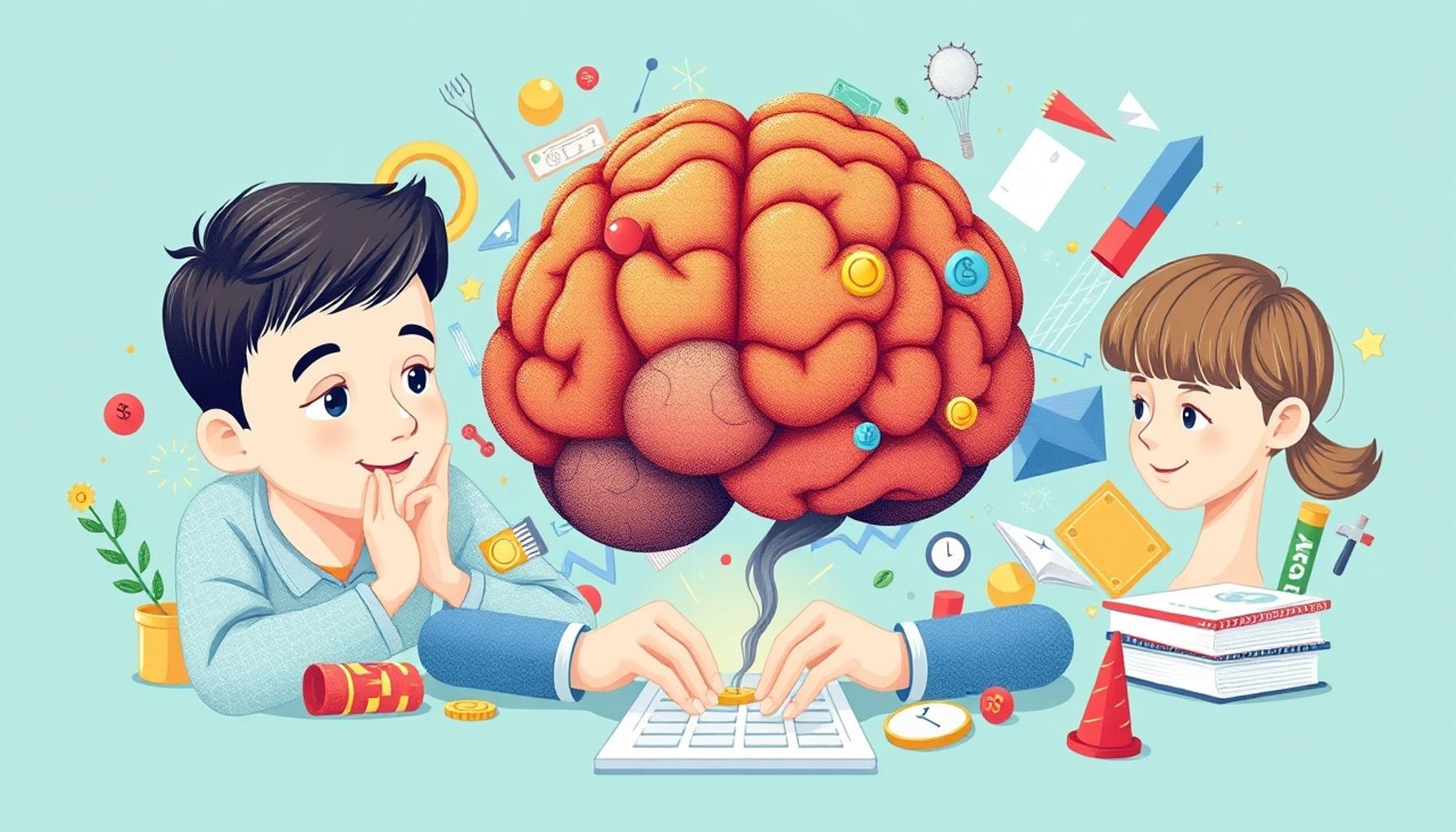
The Effect of Visual and Spatial Reasoning on Puzzle Solving Performance
Visual and Spatial Reasoning: The Building Blocks of Puzzle Solving
Puzzle solving transcends mere entertainment; it engages our cognitive skills in a rich interplay of visual and spatial reasoning. These processes form the foundation through which we interpret and manipulate various forms of information and challenges—ranging from the intricate pieces of a jigsaw puzzle to the complex structures involved in Sudoku or Rubik’s cubes. Exploring the depths of these cognitive abilities reveals why some individuals excel at problem-solving while others may struggle.
So, what exactly do we mean by visual and spatial reasoning?
- Visual reasoning: This refers to the ability to analyze and interpret visual stimuli. It involves recognizing patterns, understanding relationships, and predicting outcomes based on visual data. For instance, when faced with a complex picture or diagram, a person with strong visual reasoning can quickly identify important features that contribute to understanding the whole.
- Spatial reasoning: This capability involves the mental manipulation of objects and the visualization of spatial relationships. It allows people to mentally rotate shapes, navigate through environments, and efficiently organize items in space. For example, a student studying geometry will rely heavily on spatial reasoning to comprehend the properties of different shapes and how they relate to one another.
The significance of these skills extends far beyond the realm of puzzles, impacting various sectors in our daily lives:
- Mathematics: Particularly in geometry, a strong command of spatial reasoning is essential for solving equations and constructing models.
- Architecture: Architects rely heavily on these skills to design spaces that are not only aesthetically pleasing but also functionally sound, considering how individuals will interact with the environment.
- Everyday tasks: Navigation—whether driving through new cities or arranging a room—often requires a finely tuned spatial sense to ensure efficiency and effectiveness.
Research consistently shows a compelling link between these reasoning types and puzzle-solving performance. Individuals demonstrating a higher proficiency in visual and spatial reasoning often find themselves tackling complex puzzles with greater ease and speed. This naturally leads to several intriguing questions:
- Are certain puzzles designed to preferentially challenge individuals with specific reasoning skills, such as visual recognition versus spatial manipulation?
- How do variations in these cognitive abilities influence a person’s overall strategy and approach to problem-solving?
- Is it possible to enhance one’s visual and spatial reasoning skills through practice, thereby improving puzzle-solving capabilities?
As we embark on a deeper exploration into these cognitive dimensions, we aim to unveil how visual and spatial reasoning intricately threads through our interactions with puzzles. Join us in uncovering the science behind these skills that breathe life into the world of puzzles, showcasing the remarkable mental agility they foster. Moreover, by understanding their roles and enhancing these abilities, individuals can improve their problem-solving repertoire, leading to greater successes in educational, professional, and everyday contexts.
The Science Behind Puzzle Solving and Cognitive Skills
To truly grasp the effect of visual and spatial reasoning on puzzle-solving performance, we must first delve into the intersection of cognition and problem-solving. Studies in cognitive psychology have revealed that our brains rely heavily on visual and spatial reasoning abilities, enabling us to tackle and conquer puzzles effectively. When individuals engage in puzzles, they are not simply performing rote tasks; instead, they are activating complex mental processes that allow for a deeper understanding of the challenge at hand.
One significant area of research focuses on how visual and spatial reasoning can predict success in puzzle-solving. For instance, consider the classic game of chess—a puzzle of strategy involving the position of pieces on an 8×8 grid. Players with strong visual reasoning skills can quickly recognize patterns and foresee the consequences of individual moves, while those with robust spatial reasoning can mentally visualize multiple potential game scenarios. This dual dependency highlights why some individuals excel in chess and similar games compared to their peers.
Notably, a significant contributor to this conundrum lies in the type of puzzle being solved. Research indicates that certain puzzles cater to specific cognitive skills, leading to varied performance outcomes:
- Jigsaw puzzles: These require a combination of visual reasoning to discern pieces’ colors and patterns, alongside spatial reasoning to manipulate pieces into their rightful places.
- Logic puzzles: These thought challenges often depend more heavily on visual reasoning, as pattern recognition and deduction play substantial roles in finding solutions.
- Spatial puzzles: Games such as Rubik’s Cube emphasize spatial reasoning—where one must manipulate the cube effectively and visualize the transitions of its colors across multiple axes.
This diversity offers fascinating insights into how individual strengths can dictate approach and strategy when faced with different types of puzzles. Understanding these correlations can lead to a more tailored approach to enhancing cognitive skills, suggesting that individuals may benefit from focusing on specific puzzles that align with their reasoning strengths to improve their overall performance.
Moreover, the nature of puzzles often dictates not only how they engage visual and spatial reasoning skills but also their role in cognitive development. Engaging regularly with puzzles promotes brain plasticity—enabling the brain to adapt and rewire itself, improving performance in tasks that rely on these critical reasoning skills. For children, in particular, early exposure to various types of puzzles can lay a robust foundation for future problem-solving prowess. The implications extend beyond mere entertainment; acquiring these skills can set the stage for academic success in areas such as mathematics, engineering, and architecture.
Clearly, the effect of visual and spatial reasoning on puzzle-solving performance is multifaceted. As we continue this exploration, we aim to uncover how these cognitive skills not only influence individual performance but also how they can be harnessed and developed for various applications in life, leading to improved problem-solving abilities in diverse contexts.
The Effect of Visual and Spatial Reasoning on Puzzle Solving Performance
Visual and spatial reasoning are crucial cognitive skills that significantly influence an individual’s ability to solve puzzles. Understanding how these abilities function can not only enhance personal puzzle-solving skills but also contribute to broader educational approaches. When engaging with puzzles, individuals must manipulate and visualize different shapes and patterns, identify relationships among pieces, and often translate two-dimensional drawings into three-dimensional objects. This mental flexibility is intrinsic to successful puzzle solving and extends into various real-world applications.
Research has indicated that effective visual and spatial reasoning skills are often linked to improved problem-solving abilities. For instance, individuals with high spatial reasoning exhibit stronger performance in both mathematical tasks and in fields such as engineering and architecture, where visualization is key. Furthermore, through enhanced spatial awareness, individuals can foresee the results of their actions, allowing for strategic planning when tackling complex puzzles.
Moreover, specific types of puzzles may serve as effective training tools to foster visual-spatial reasoning. Activities such as jigsaw puzzles, 3D modeling, and certain video games challenge individuals to think critically about space and structure, yielding significant cognitive benefits. By practicing with these puzzles, one can improve their spatial intelligence, ultimately influencing their performance not only in recreational activities but also in academic and professional settings.
| Category | Details |
|---|---|
| Enhanced Problem-Solving Skills | Individuals exhibit improved ability to approach and solve complex challenges. |
| Cognitive Development | Engagement in spatial reasoning tasks enhances educational outcomes across disciplines. |
Understanding the role of visual and spatial reasoning in puzzle-solving can guide educators and trainers in developing targeted interventions that strengthen these skills. As puzzles continue to be a universal and engaging form of cognitive challenge, the implications of these findings pave the way for new strategies in both learning and personal development.
Enhancing Cognitive Skills through Puzzle Engagement
As we dive deeper into the impact of visual and spatial reasoning on puzzle-solving performance, it’s essential to explore how these cognitive skills can be intentionally cultivated and improved. Drawing from various psychological studies, researchers have found that engaging with puzzles not only sharpens existing abilities but also fosters new skills. This dynamic interplay makes puzzles a unique tool for cognitive enhancement, offering both enjoyment and educational value.
One particularly interesting aspect of cognitive training through puzzles is the concept of transfer of learning. This principle suggests that the skills developed while solving one type of puzzle may transfer to other areas of life, leading to improved cognitive function in seemingly unrelated tasks. For instance, individuals who regularly engage in spatial puzzles like 3D modeling games often report enhanced abilities in fields requiring spatial awareness, such as architecture and graphic design. This correlation emphasizes the far-reaching effects of strong visual and spatial reasoning capabilities.
Moreover, several studies have demonstrated that engaging in puzzles can serve to alleviate cognitive decline associated with aging. Older adults who regularly participate in visual-spatial activities, such as playing Sudoku or completing crossword puzzles, not only retain cognitive function longer but also report higher levels of mental agility. The findings suggest that puzzle-solving can create a protective effect against conditions such as dementia, showcasing the long-term benefits of these cognitive exercises.
Puzzles also present ample opportunities for social connection and collaboration, which can further enhance cognitive performance. Whether it’s solving a crossword puzzle with friends or working on a challenging giant jigsaw as a family activity, social puzzle-solving introduces an element of interaction that can stimulate discussions, encourage new perspectives, and ultimately boost problem-solving abilities. In fact, research suggests that collaborating on puzzles can promote a more profound understanding and innovative thinking by allowing participants to combine their visual and spatial reasoning skills.
In addition to the immediate cognitive benefits, puzzles can play a crucial role in early childhood development. During formative years, children engaging with puzzles enhance their visual and spatial skills, critical for future learning in subjects such as math, science, and engineering. Educational toys like building blocks and tangrams are not only fun; they significantly contribute to developing young minds. For example, children who solve puzzles exhibit notable improvements in pattern recognition and logical reasoning, which are foundational skills for academic success.
Finally, the advent of technology has introduced a modern twist to puzzle engagement, with mobile applications and online platforms now offering diverse puzzles that can be accessed freely. These digital games often incorporate elements of visual and spatial reasoning, employing algorithms to adapt challenges according to player skill levels. As a result, individuals can enhance their cognitive performance through tailored puzzle-solving experiences that adjust to their specific capabilities, making the process both enjoyable and beneficial.
In summary, the dynamic relationship between puzzle-solving and cognitive development cannot be understated. As we consider the broader implications of visual and spatial reasoning on performance, it becomes evident that these skills are not only vital in solving puzzles but also serve as a foundational bedrock for navigating the complexities of daily life.
Conclusion: The Lasting Impact of Visual and Spatial Reasoning in Puzzle Solving
In light of the comprehensive exploration of visual and spatial reasoning and its significant influence on puzzle-solving performance, it is clear that these cognitive skills play a pivotal role in our ability to approach and conquer complex challenges. Engaging with puzzles not only enhances our mental acuity but also nurtures essential skills applicable across various domains of life. The practice of solving puzzles—from traditional jigsaws to modern digital games—provides a multifaceted avenue for cognitive training, promoting both individual growth and social collaboration.
Furthermore, the concept of transfer of learning illustrates that the development of spatial reasoning abilities while solving puzzles can enhance performance in fields like architecture, teaching, and engineering. The protective benefits of puzzles against cognitive decline highlight their importance, especially for the aging population who seek to maintain their mental sharpness and delay conditions such as dementia.
Additionally, the emerging digital landscape of puzzle engagement introduces an accessible way to cultivate these vital cognitive skills, making puzzle learning adaptable and tailored to individual needs. As such, it becomes evident that puzzles serve not merely as entertainment but as educational tools with profound implications for mental development from childhood through old age.
Ultimately, by embracing the art of puzzle-solving, we can effectively enhance our visual and spatial reasoning abilities, paving the way for a future filled with improved problem-solving skills and greater cognitive resilience. In a world where challenges constantly arise, nurturing these skills can empower us to navigate life’s puzzles with confidence and creativity.

Beatriz
Beatriz Johnson is a seasoned puzzle enthusiast and writer with a passion for unraveling the complexities of mind games and brain teasers. With over a decade of experience in the world of puzzles, she specializes in topics like logic games, riddles, and strategic challenges. Through her work, Beatriz empowers readers to sharpen their problem-solving skills, think creatively, and stay engaged in the ever-evolving landscape of mind games and puzzles.